Best Books for Early Readers 2026 (K–2nd Grade)
June 4, 2026 · ParentRankings Editors
Our Top Pick
Elephant & Piggie Series
With 25 books engineered around dialogue, humor, and instant readability, Elephant & Piggie is the single most effective early reader series for building genuine confidence in kids who are just crossing the threshold into independent reading.
Kirkus Reviews just dropped its curated "Best Beginning Readers of 2025" list, and librarian-blogger Rec-It Rachel spotlighted eight standout new titles for the K–2nd grade crowd. That kind of editorial convergence is a signal worth paying attention to. It means publishers are putting genuine effort into this category right now, and the selection available to your child today is meaningfully better than it was even a few years ago.
That editorial energy also makes this the right moment to take a hard look at what's actually on your child's bookshelf. The early reader window is narrow and consequential. The habits and associations kids build around books between kindergarten and 2nd grade tend to stick. A child who finds reading fun at age 6 reads voluntarily. A child who finds it frustrating at age 6 avoids it, and avoidance compounds fast. Getting the right books in front of the right reader at the right level is not a small thing.
We ranked five of the most proven titles across engagement, reading-level fit, and literary quality. These are not the five most recently published or the five most heavily marketed. They are the five we'd hand to a parent who asked us, "just tell me what to buy." Here's how we made those calls.
What Makes a Great Early Reader Book? Here's What We Evaluated
Reading level fit is where we started, and it's more nuanced than it sounds. The goal isn't the easiest possible book or the most challenging one. It's the sweet spot where a child can decode most words independently but still runs into enough new vocabulary to actually grow. Too easy and the book becomes a confidence-without-challenge exercise. Too hard and reading time turns into a stress event, which is the fastest way to build a kid who hates books. We scored each title on how accurately it targets the K–2nd grade decoding range, and we were strict about it.
Engagement and repeat-read appeal got heavy weight in our scoring because a book a child refuses to put down is doing more literacy work than a technically appropriate book that sits on the shelf. Voluntary reading time is the single biggest predictor of reading growth. Humor, character likability, and narrative momentum all factor in here. If a kid asks for the same book three nights in a row, that's not a problem. That's the mechanism working exactly as intended.
Illustration quality matters at this stage in a way that parents sometimes underestimate. For K–2nd graders, pictures are not decoration. They carry meaning, support comprehension, and teach kids how visual and written information work together. We evaluated whether the art actively helps early readers decode the story or simply accompanies it. There's a real difference, and the books that get it right give kids a scaffold they can actually use.
Literary quality was a non-negotiable criterion for us, and we make no apologies for that. Early reader books can be both accessible and genuinely well-written. The best ones are. We looked at whether the language, themes, and emotional content hold up to adult scrutiny, because books parents enjoy reading aloud get read aloud far more often. That increased exposure to rich vocabulary and story structure compounds over time in ways that show up on reading assessments years later.
Value and series depth rounded out our criteria. A single great book is a good purchase. A series a child loves is essentially a self-sustaining reading program. We factored in price per book, availability, and whether a title belongs to a series that can carry a reader forward for months without requiring a new discovery every week. For busy parents, that last part is not a minor convenience.
Who Should Buy
If your kindergartener is just crossing the threshold into independent reading, our top pick is built for exactly this moment. The dialogue-driven format makes the text structure visually obvious, the humor keeps kids turning pages on their own, and the depth of the series means you won't be scrambling for the next book the week after your child gets hooked.
If you have a child under 6 who is still building pre-reading skills, our runner-up is the book reading specialists point to most consistently as the foundational literacy starting point. The interactive die-cut pages and layered concept teaching make it genuinely useful, not just charming.
For a 1st or 2nd grader who has outgrown picture books but isn't ready for chapter books, our best value pick threads that needle better than anything else in its price range. Five short stories per volume gives early readers a real sense of reading achievement without overwhelming them, and the per-book cost is hard to argue with.
If you're dealing with a reluctant reader in kindergarten or 1st grade who has started to dread reading time, our pick for that situation uses repetitive, song-like text to give struggling decoders a predictable pattern to latch onto. The anxiety drops. The confidence builds. It works.
And if you need to get a 1st or 2nd grade boy voluntarily reading on his own, our pick for that exact scenario has a track record that's hard to argue with. The graphic novel format, the humor calibrated precisely to the 6-to-9-year-old sensibility, and the deep series catalog have converted more reluctant readers than almost anything else in this category.
See all 5 Best Books for Early Readers (K–2nd Grade) ranked →
More Picks We Love
Our full ranking, scored by our editorial team on safety, value, ease of use, and quality.
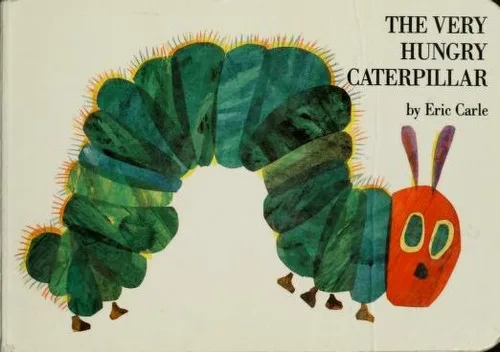
The Very Hungry Caterpillar
Eric Carle's collage-art masterpiece layers counting, days of the week, and life-cycle concepts into a tactile, die-cut reading experience that pediatric reading specialists consistently recommend as the foundational literacy starting point for children under 7.
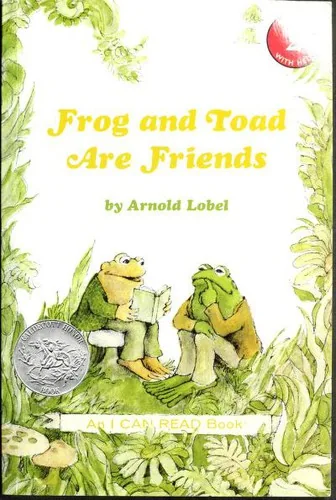
Frog and Toad Are Friends
At under $9 a volume, Frog and Toad delivers the ideal I Can Read Level 2 bridge from picture books to chapter books, with emotionally resonant friendship stories that 1st and 2nd graders carry with them long after the pages are worn.
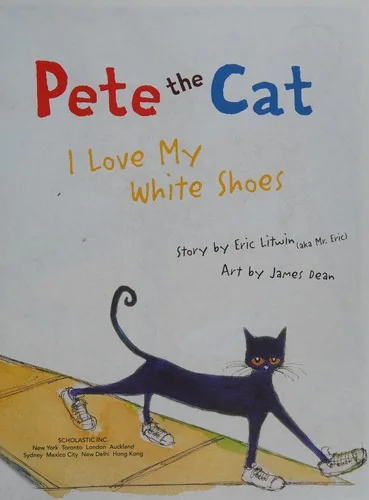
Pete the Cat Series
Pete the Cat's song-like repetitive structure gives struggling decoders a predictable foothold on every page, making it one of the most reliable confidence-building tools available for kindergarteners and 1st graders who have started to dread reading time.
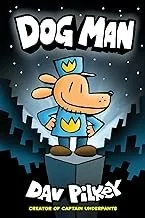
Dog Man Series
Dav Pilkey's graphic novel format distributes the narrative load between pictures and text in a way that makes 1st and 2nd grade boys — historically the hardest group to hook on reading — voluntarily pick up books and stay there for an hour.
Frequently Asked Questions
What reading level should my kindergartener be at, and how do I pick the right book?▾
Most kindergarteners enter the year recognizing letters and some sight words and leave able to read simple sentences independently — though the range is wide. Look for books labeled Pre-Level 1 or Level 1 in the I Can Read system, or books with short sentences, large type, and strong picture support. Elephant & Piggie and Pete the Cat are both well-calibrated for this stage. When in doubt, the 'five-finger rule' works well: if your child struggles with more than five words on a page, the book is likely a level too high for comfortable independent reading.
Is it okay if my child has already memorized a book — are they actually reading?▾
Memorization is a normal and productive part of early literacy development, not a shortcut around it. When children recite a memorized text while tracking the words on the page, they are building the critical connection between spoken language and printed symbols. The Very Hungry Caterpillar is a common example — many kindergarteners 'read' it from memory, and that is genuinely valuable. The goal is to pair memorized favorites with new books that require actual decoding so both skills develop together.
My 2nd grader is a strong reader — are any of these books still appropriate?▾
Frog and Toad Are Friends and Dog Man both hold up well for strong 2nd grade readers. Frog and Toad offers genuine literary quality and emotional depth that rewards more capable readers, while Dog Man's graphic novel format and humor remain engaging even for kids who could technically read harder books. For a strong 2nd grader who has burned through these, the Magic Tree House series and early Junie B. Jones books are natural next steps.
How many books should my early reader be reading per week?▾
Most reading specialists recommend 15–20 minutes of daily reading practice for K–2nd graders, which typically translates to one to three short early reader books per day depending on length and level. Consistency matters more than volume — a child who reads for 15 minutes every day will outpace one who reads for an hour on weekends. Series like Elephant & Piggie and Dog Man are particularly useful here because a child who loves the characters will self-motivate to that daily habit without parental prompting.
Should I read to my child even after they can read independently?▾
Yes — reading aloud to children who can already read independently remains one of the highest-value literacy activities through at least 4th grade. When a parent reads aloud, children are exposed to vocabulary, sentence structures, and narrative complexity that sits above their current independent reading level, which accelerates overall language development. It also keeps the emotional association with books positive, which is the foundation everything else is built on.
Ready to compare all options?
See every books grades k 2 ranked by our editors — scored on safety, value, ease of use, and quality.
See all 5 Best Books for Early Readers (K–2nd Grade) ranked →